There are drawbacks to going into movies raw. For instance. I didn’t have “the rape of Nanjing” on my BINGO card this afternoon. People really ought to prepare themselves for 137 minutes of historical rape … although, how can you, really?
Historical horror is not new to SE Asia, but like the Bataan Death March, the Khmer Rouge, and Boba Tea, these are all horrors I know very little about, hence, I was able to go into Dead to Rights with an open mind.
Some things to keep in mind here: 1) The Chinese government controls all Chinese art industry and releases. 2) Chinese people generally have a worse impression of the Japanese than the depiction one might see in Bridge on the River Kwai. 3) This event is known world-wide as “the rape of Nanjing” (or Nanking, when I was growing up). Hence, this ain’t gonna be pretty, BUT, the censors will probably restrict the worst to RoboCop-style violence when the reality almost certainly did include rape.
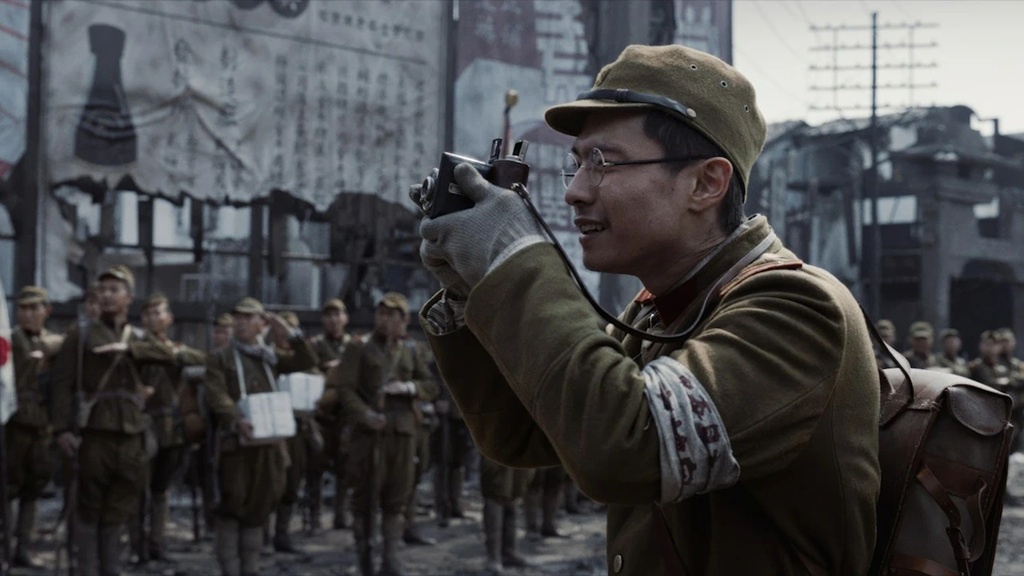
The year is 1937. The Japanese have invaded Manchuria and taken over a fair amount of Eastern China. Presently, they’ve set their sights on attacking cities. The people of Nanjing flee, as well as they are able. Su Liuchang (Haoran Liu) is a postman. He loses his mates while delivering a key letter only to find their escape truck has been blown up. He’s caught in the city.
I dunno how much of this is propaganda, but -let’s face it- there was historical picture evidence captured IRL, so however much the Chinese were set to gin up the criminality of the invading Japanese force, it couldn’t have been too far from the actual truth. Still, the following scenes were hard to take: Japanese soldiers essentially committed war crime after war crime and took pictures for the purposes of boasting.
Su Liuchang is captured and about to be executed by the company photographer when it is realized that he’s carrying film. Asked if he’s a photo developer, Su [read: “Ah Chang”] says Hell-to-the-yes, because what else is he gonna say, huh? The Japanese were executing civilians for photo ops at this point. The thing is, Ah Chang knows as much about developing film as I do, which is to say, nothing.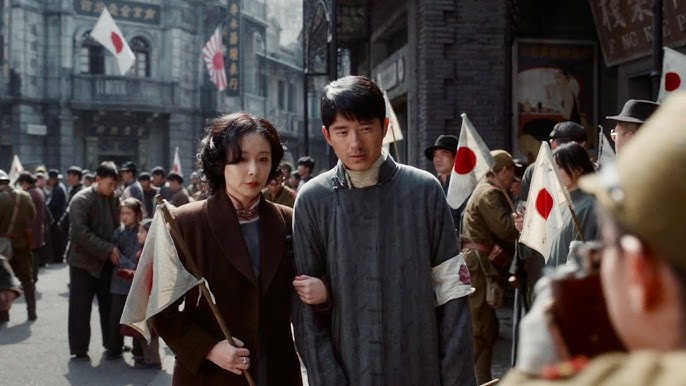
However, the local photomat has a whole Anne Frank family outing going on and the true owner helps out until Ah says, “Ahhhhhhhh.” Can he keep it up and keep the family alive during the entire rape? Well, you’ll just never find out, will you.
Dead to Rights comes off as a poor man’s The Pianist. The ugly is a little too ugly, and the film is just too damn long. It also insisted on investing us in an entire family of fugitives including a baby and an aunt just in case we were not invested enough with Ah Chang. This film is also so anti-Japanese, it’s impossible to see it getting any credence outside of Chinese circles. If nothing else, however, I knew nothing of the rape of Nanjing going in … and now I know something. Hmmm, what’s next? Bataan? Khmer Rouge? Boba Tea? I’ll wiki the least horrible sounding of the three: Bataan it is.
There once lived a postman, Ah Chang
Caught up when the Japanese rang
But the purge can wait
Because the captors feed hate
And film war crimes like they’re in a street gang
Not Rated [read: historical ugliness], 137 Minutes
Director: Ao Shen (Like a drop in the …)
Writer: Ao Shen, Luyang Xu, Ke Zhang
Genre: WWII sucked for everybody
Type of being most likely to enjoy this film: The famed “photographers are heroes” lobby
Type of being least likely to enjoy this film: Japanese