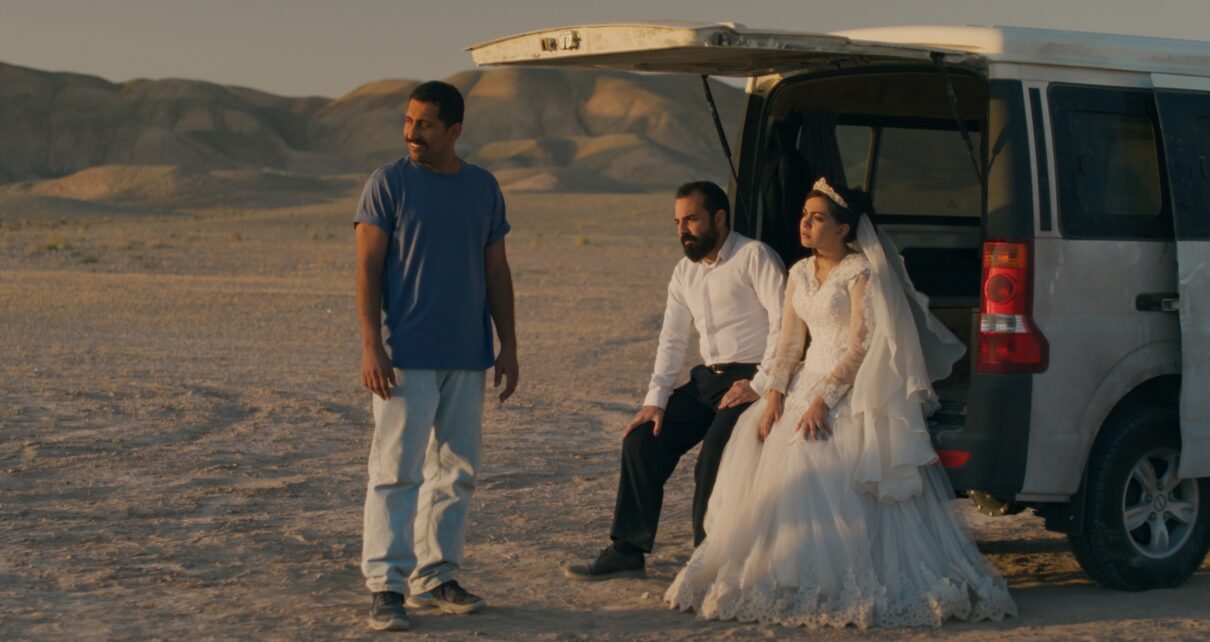
Look, I don’t ever want to hate a film. It just happens. A lot. You see enough film, you’re gonna hate a bunch of them. Sometimes I’m good at hating film. Sometimes I relish hating overrated film, especially the Cannes selections. I often have no idea what the flying fuck the French are thinking. Did I want to hate films like Triangle of Sadness or Annette or Amour? I did not. But was I happy to rip into them once I discovered they were overrated? OH YES. I MOST CERTAINLY WAS. And yet I -quite honestly- wanted them to be good. Hence, I’m happy to report that in my endless love/hate relationship with the Palm D’Or, the 2025 winner is in the “love” category.
It really was just an accident. The man with the prosthetic leg driving his wife and daughter home from who-knows-where didn’t mean to hit and kill the dog. He was just driving in an area without streetlights. Turns out, fate has a sense of humor. And for this you need background:
Years ago, in this land (presumably Iran), there was a company whose workers decided they wanted better. They protested. The governmental regime at the time wasn’t a fan of the protest. So when the workers protested, they were captured, blindfolded, and tortured by a man with a prosthetic leg.
The man (Ebrahim Azizi) finds his car no longer operational after the accident and asks for the nearest garage, which is two kilometers away. However, the guy pulling into the warehouse next to where the car has stalled says he might be able to fix the car. Great!
Well, “great” depends on the consideration of a bunch of factors. And perhaps a bunch of other factors generally unconsidered like whether or not the guy overhearing Mr. Pegleg recognizes him as the once instrument of torture. Vahid (Vahid Mobasseri) still has the scars to show for his pains. But he was blindfolded, so how can he know for sure? The next day, Vahid captures Pegleg, takes him out to the desert, and tosses him in a pre-dug hole, accusing Pegleg of being the monstrous Eqbal, man of torture. Pegleg denies being Eqbal, of course. So then Vahid has himself a dilemma.
Is Vahid sure that Pegleg is Eqbal?
And, if so, what does he do about it?
First thing’s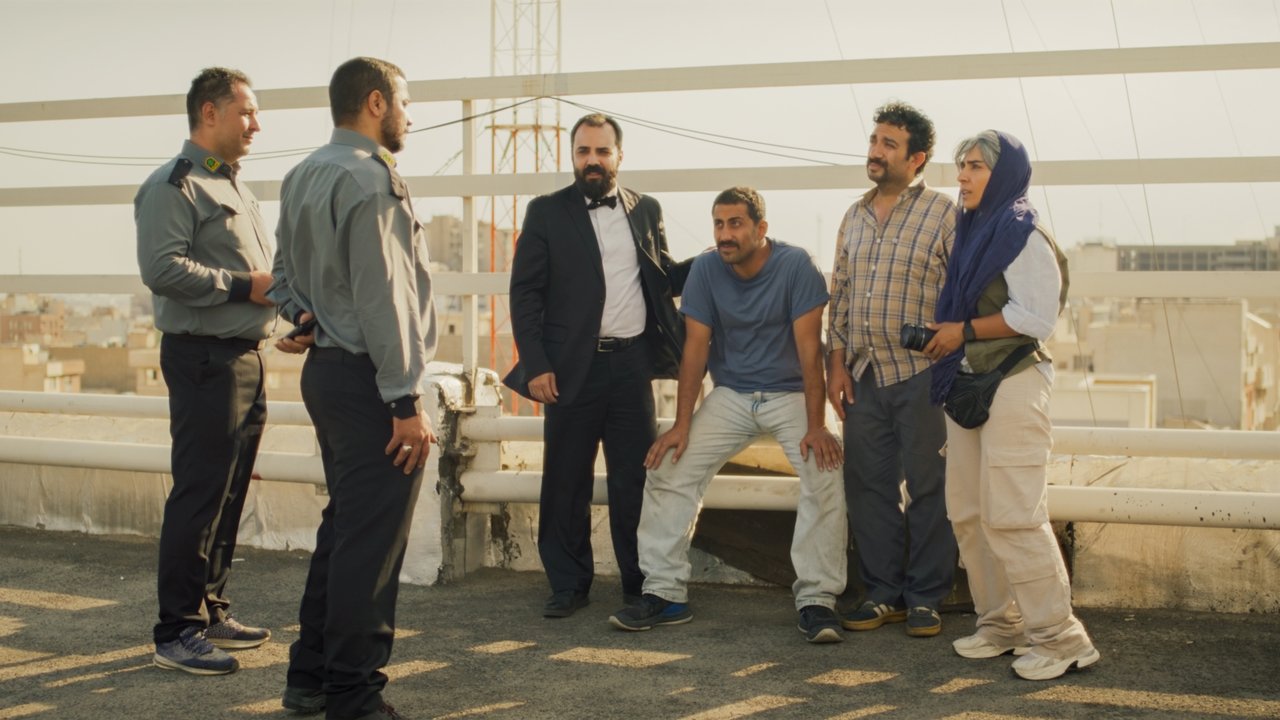 first, meaning it’s time to get more people involved. Somebody will know if Pegleg is Eqbal, right?
It Was Just an Accident is my favorite type of film: simple plot, complicated background. At its core, this really is a very simple film – these people want to ID a villain, and -if positive- figure out what to do with him. But in that simple plot, there is so much minutiae of both physical proof and intellectual dilemma. This is essentially the same film as Jafar Pahani made in 2015 with the documentary, Taxi. And yet, while I found the plot equally simple (a man driving around Iran looking for answers), I was not moved by the background of the documentary (the man simply wanted to make a film for the sake of making a film to thumb his nose at an oppressive regime – that’s great, but Allah is this ever boring).
This is a film that we likely won’t ever stop talking about. It is simple in construct, yet deep and complicated beneath the surface, ultimately asking questions like: “What is justice?” “What is fairness?” and “What does it take for good people to become monsters?” I didn’t buy every scene I saw, but I was willing to give It Was Just an Accident a break for attacking such charged material. Likely one of the best films of the year.
There was once a broken man, Vahid
Who found the man who made him bleed
But Vahid wasn’t sure
And lacked for a cure
So he collected souls until his tormentor could be ID’d
Rated PG-13, 103 Minutes
Director: Jafar Panahi
Writer: Jafar Panahi
Genre: When the past controls the future
Type of being most likely to enjoy this film: People who have survived trauma
Type of being least likely to enjoy this film: Pollyannas