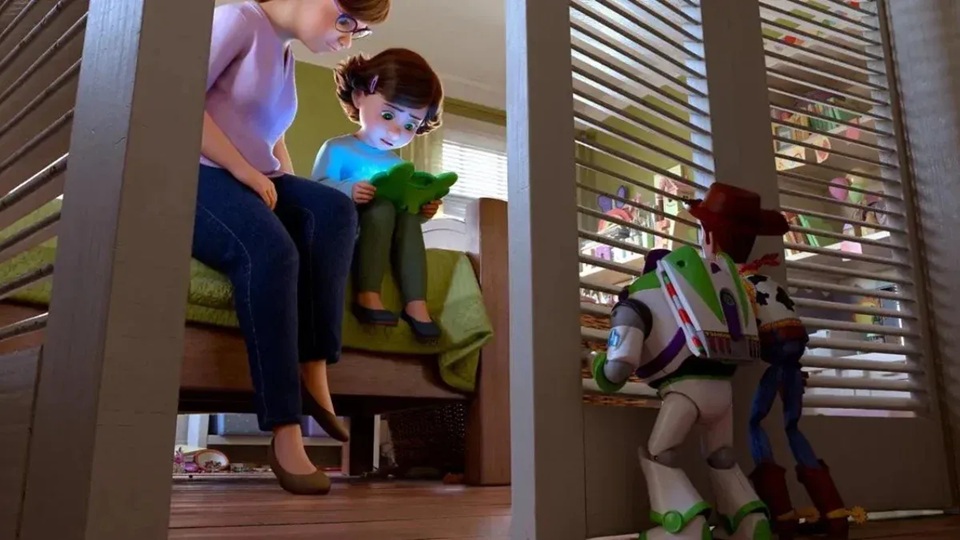
The machines are winning. We know this. AI is here to stay. Whether it will be an ultimate force for good or evil is still up in the air, thankfully. Because evil is winning, and this is the micro-scale dilemma for all the playthings in Toy Story 5. In many ways, this film echoes the dilemma of the entire planet – our attention is on our screens, our attitudes are influenced by our screens, our problems are “solved” by our screens. Why wouldn’t we devote our entire lives to the machines themselves (and forego all other forms of entertainment)? How different is that from our reality?
Bonnie (voice of Scarlett Spears) is now eight and friendless – a consequence of being simultaneously imaginative and shy. She loves to play with her toys – the same ones we’ve enjoyed for four films now. The same toys who come to life once the human leaves. The same toys flirting with existential dilemmas involving spirituality and self-doubt, which are pretty big concepts for a Mr. Potato Head, if you ask me.
I digress. Bonnie still loves her toys, except as her parents have noticed Bonnie’s anti-social behavior, they have taken measures by providing the child with her first computer: a frog-themed tablet named Lily (Greta Lee).
Obviously, I was put off by the film immediately making a villain of a frog character. Hey, Pixar, frogs are the good guys; ask the Muppets. But I get it; hey, all-powerful, mind-influencing frog. Sure, I get it.
Anyone who can’t see this one coming isn’t living in the modern world. Obviously, Bonnie becomes addicted to her new toy, abandoning all the others. And what exactly are the toys to do without their users? I hate how these films make me feel like I’ve abandoned my own toys. In some ways, I feel lucky that my entire childhood burned up in a fire. My childhood toys guys will never know the loneliness of the Toy Story posse. Fearing that Bonnie is about to cross the Rubicon of toy abandonment, Jessie (Joan Cusack), a cowgirl toy, circles the wagons, so to speak, summoning Woody (Tom Hanks) from his Bo Peepin’ estrangement, and rallying the gang around emergency measures.
Oh, and there also subplots about an island of lost Buzz Lightyears (clearly influenced by The Wild Robot), and a potential real-life, non-toy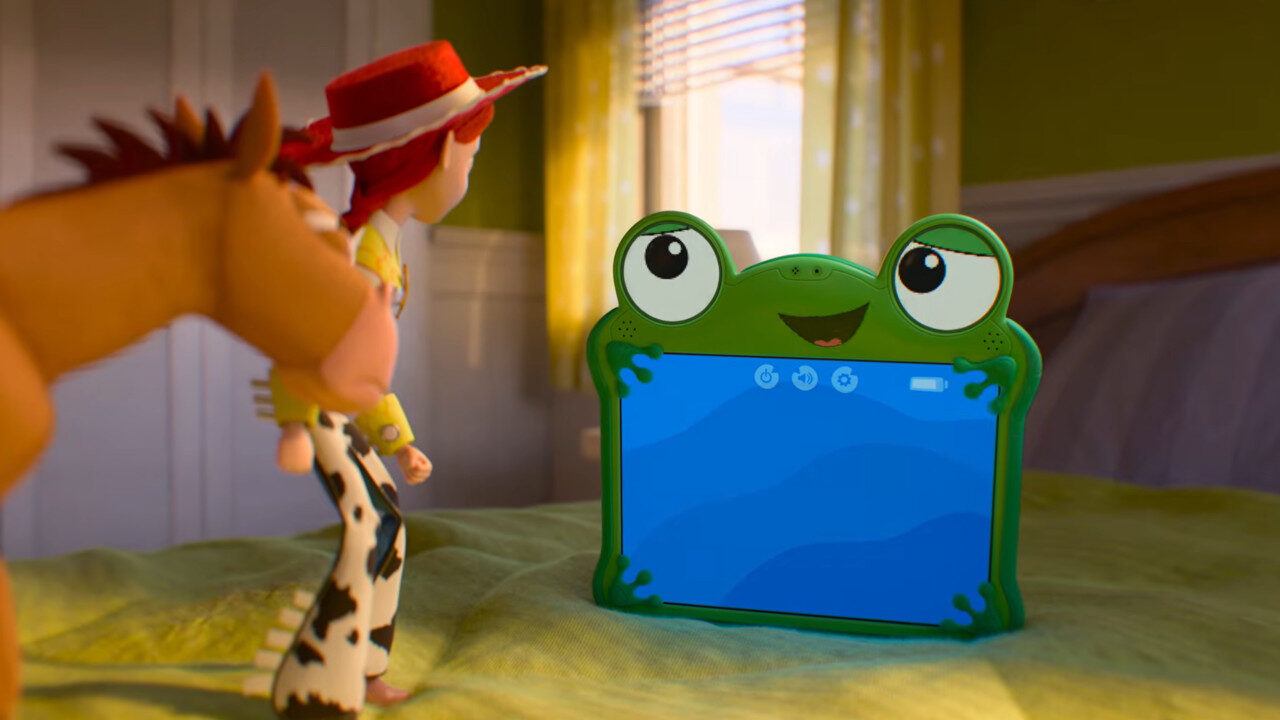 Bonnie friend who is a horse rancher of all things (!) This is not as convoluted as it sounds; Pixar and Disney certainly know how to engineer a plot. But all of this is slow to develop, and the film risks losing its way as Bonnie (quite seriously) endures psychological damage from her reliance on tech. [This is the message of the film, btw. And it is definitely a message worth exploring.]
Long Toy Story short: the second half of the film not only surprised me; it moved me deeply. After five (5) freaking Toy Story adventures, you’d think these guys couldn’t get me to cry again for them. You would be wrong. Well, *I* would be wrong.
Toy Story 5 is another Pixar gem. I hate to put any emphasis on the “5,” because I think it works as a stand-alone film for the most part. I mean, a noob to the world of Toy Story may wonder where Woody comes from and why is still friends with these other toys, but it doesn’t really matter. The point is that -ironically- a human connection is much deeper than a technological connection. And even if you don’t believe that, the film is still worth seeing to see what an army of Buzz Lightyear dolls can get up to … or watching a cowgirl have PTSD “Nam”-like flashbacks. It’s all very deep, and yet easily consumed for the appropriate, pre-pubescent audience it caters to. Great film. One of the best of 2026.
There once was a cadre of lost toys
Estranged equally from both girls and boys
For tech rules the roost
Analog needs a boost
Yet maybe screens are all just empty noise
Rated PG, 102 Minutes
Director: McKenna Harris, Andrew Stanton
Writer: Andrew Stanton, McKenna Harris
Genre: The incredible depth of animation
Type of being most likely to enjoy this film: Progressive parents
Type of being least likely to enjoy this film: Lazy parents