When capitalism dies, it will go straight to Hell. There won’t be any guessing or pretending; I’m sure the masters of the netherworld have a punishment already laid out and waiting. Don’t get me wrong; I’m not necessarily supporting any other system of economic means. I just know that capitalism is evil. And if you watch Tow without hitting that conclusion eventually, there might be something wrong with you.
Tow is a classic lament of where we are exactly as a society, which is what makes it so tough to watch. In essence, it is the story of homeless woman in Seattle dicked around by the system. You can blame lawyers, or bureaucracy, or towing companies and the moguls than run them, or the woman’s own pigheadedness, but what’s truly at fault here is society. And failure to recognize such goes beyond simple blinders.
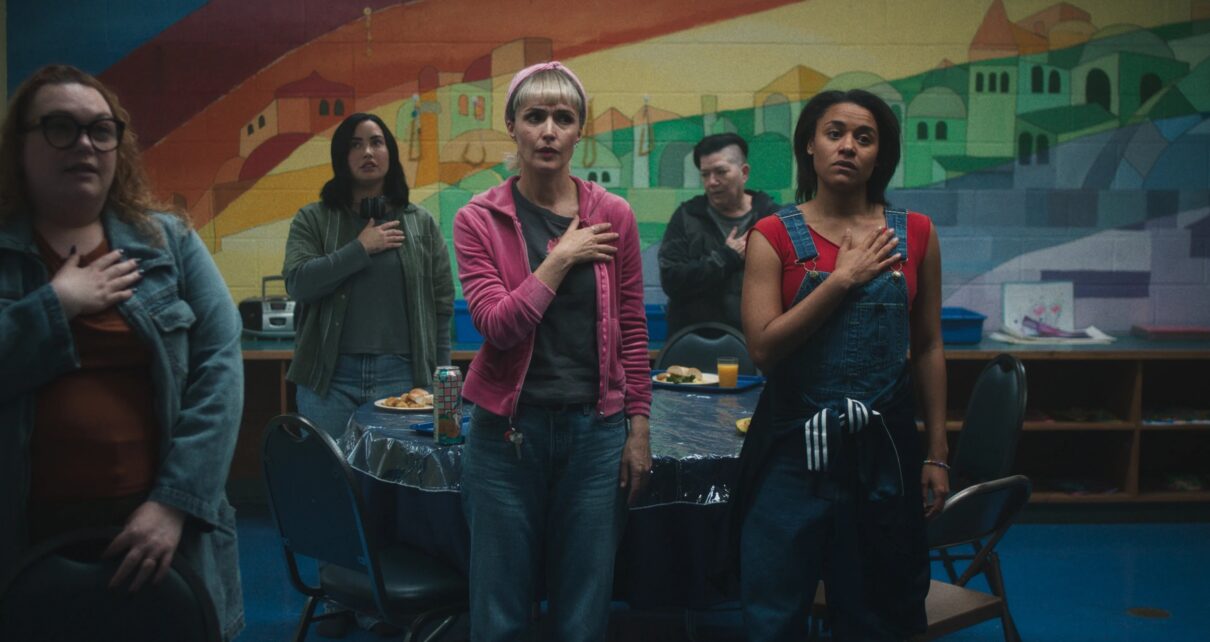
Amanda Ogle (Byrne) is homeless. She doesn’t think so. But many homeless people don’t think they’re homeless. Many poor people don’t see themselves as poor; that’s what makes them so susceptible to, say, the promises of Donald Trump; they don’t realize they’re the mark. But it is definitely human nature to delude yourself into believing you’re not as bad off as the other guy.
A dog-groomer by trade (she has a degree in this!), unemployed Linda lives in her car. That’s homeless. And it makes her ultra-dependent upon her car. So on the day in question when she gets an interview at a pet salon, having her car stolen becomes a critical matter. Her very used 1995 Toyota Tercel might have a blue book value under $2,000, but to Amanda it’s the difference between independence and scrounging, between making it and just barely holding on. No car means no bed, no security for her meager possessions, no security for her person, no method of transportation, no job, no life, and no ability to visit her daughter in Colorado over the holidays.
It gets worse.
(Oh, and get used to that phrase. “It gets worse” describes every five-minute segment of this film for the first hour-and-a-half.)
Her car was stolen and abandoned. Then it got a Tow. Now the Tow company wants the towing fee plus penalty plus storage
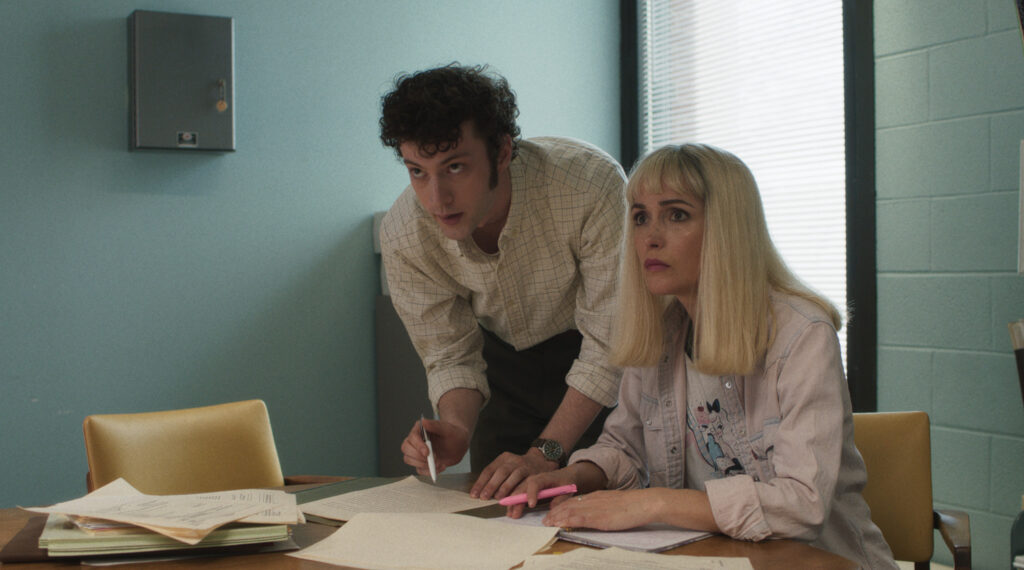
fee. It comes to $273. When you live in your car, $273 is a fortune; you may as well be asking for $10 Million.
It gets worse.
Well, I won’t bore you with the rest. Suffice to say, this is a very difficult picture to watch precisely because it is so relatable. And there is no lack of villains everywhere: The nameless jerk who stole her car and abandoned it in a tow-away zone, the Tow company who failed to recognize the nature of the situation, the owner of the Tow company who -upon being confronted with his own failures- compounded matters, the courts for lack of swift action, the police for lack of swift action, the dog-groomers for not accommodating a qualified applicant with more understanding, the woman herself for creating a life so vulnerable that one simple theft could deprive her of all she holds dear. But all of this, you will note, comes down to society. Every problem in this entire film has been magnified by a society which rewards achievement through selfishness and money ahead of security. Tough as it is to watch, Tow feels like a must-see for every American man, woman, child, or other. It is not a perfect film, but boy does it make you cringe. Well, makes me and every other American with a conscience cringe. I dunno about, like, Trump voters or any other of you empathy-challenged douchebags. If you watch like you vote, you’ll cheer on the towing company.
There once was a woman named Amanda
Who had a homeless life so unplanned-a
Her auto was stolen
Which left her beholden
To the very back of society’s hand-a
Rated R, 105 Minutes
Director: Stephanie Laing
Writer: Jonathan Keasey, Brant Boivin
Genre: Films that make you reconsider your life
Type of being most likely to enjoy this film: People who appreciate how much worse it is when there’s no safety net
Type of being least likely to enjoy this film: “Why doesn’t she just get a job?”