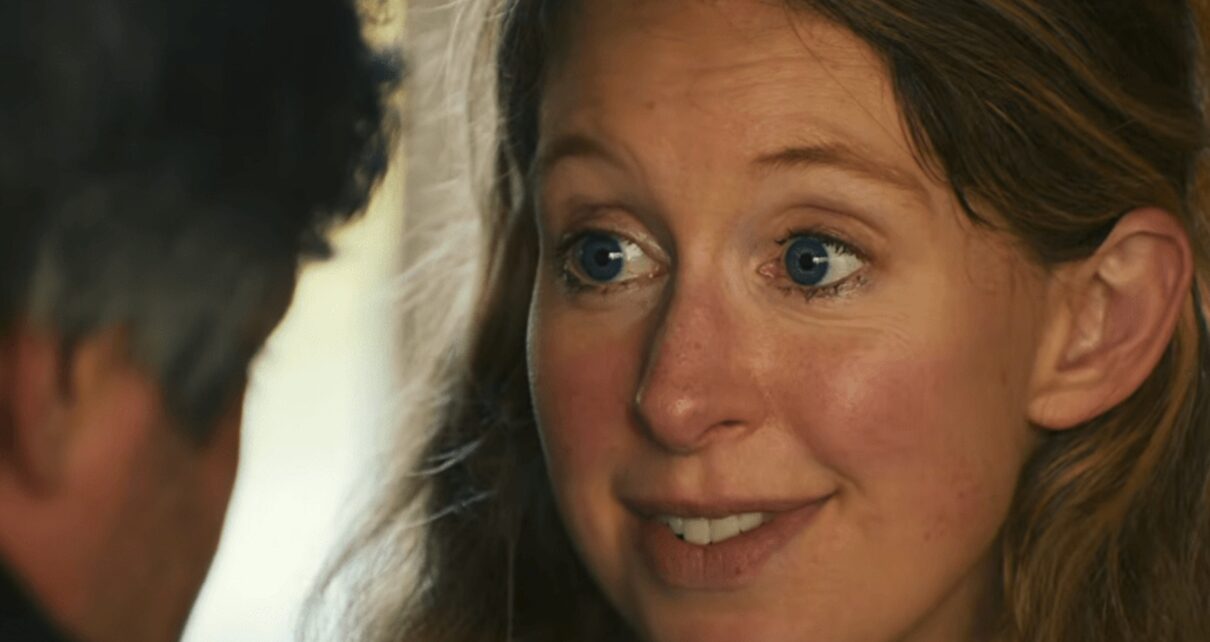
Did she or didn’t she? I have a guess, but I’ll never know for sure. This is the promise of the most discussed film in several years: You Can See Everything. This film is a documentary, but a throwback to unsure documentaries, films that raised more questions than they answered.
The basic premise is this: Doe-eyed, muppet-like Elizabeth Holmes was founder and CEO of Theranos, a medical technology company. She claimed to have made a product that could reduce all medical testing to a single device the size of a toaster. These claims made Theranos rich. And when they proved untrue, a jury found Holmes guilty of criminal fraud to the tune of half a billion dollars and an 11-year prison sentence.
Filmmaker Nathan Fielder, attempting to seek the truth, contracted to spend the last month before Elizabeth Holmes had to report to prison in immediate proximity with Elizabeth and her husband, Billy Evans. The first half of the documentary is all about getting to know Elizabeth and Billy. The couple, insisting eternal innocence, invited, “You Can See Everything” as if they have absolutely nothing to hide in their San Diego rental beach home. Why, they’ve even been trying to make another prototype for this failed medical invention.
It’s clear from the outset there is something wrong with (about?) Elizabeth Holmes. This makes for a series of awkward and incredulous interviews as Elizabeth claims she isn’t lying, wasn’t lying, and has never lied in her entire lifetime. OH. OK. She even claims that her fraudulent claims were not fraudulent; we just don’t understand her perspective. Confused, Nathan shows the couple the classic Abbott and Costello “Who’s on First” routine. Elizabeth doesn’t get it. Just doesn’t. A woman savvy enough to CEO a tech company and work on a consummate health tech tool simply doesn’t understand the humor in “Who’s on First?”
Is it all an act? Wouldn’t the cameras have found something if it were not?
And is Nathan kinda falling for Elizabeth? What’s is up with this relationship .. or her relationship with Billy for that matter?
In 2022 – in between trial ending and prison beginning, Hulu produced a drama miniseries entitled “The Dropout,” starring Amanda Seyfried as Elizabeth Holmes. The Dropout was a dramatic recreation of the Theranos history. For the second half of You Can See Everything, Nathan Fielder enlists Amanda Seyfried herself to act out portions of conversations the film crew was not legally entitled to capture. This is a very clever thing to do. Yeah, they can’t put Elizabeth Holmes calling from prison on camera for a film, BUT they can record the call, write a transcript, and have Seyfried act out the role of Holmes … one she knows pretty well by now.
Amanda Seyfried didn’t stop there, however. Insisting that she could get information than Nathan Fielder could not, she tags along on most the investigative trips in the second half of the film, and, oh boy, is she right. She definitely does get information Nathan Fielder couldn’t get by himself.
OK, so what is all this? What’s the big deal? Why are so many people talking about this film? The answer 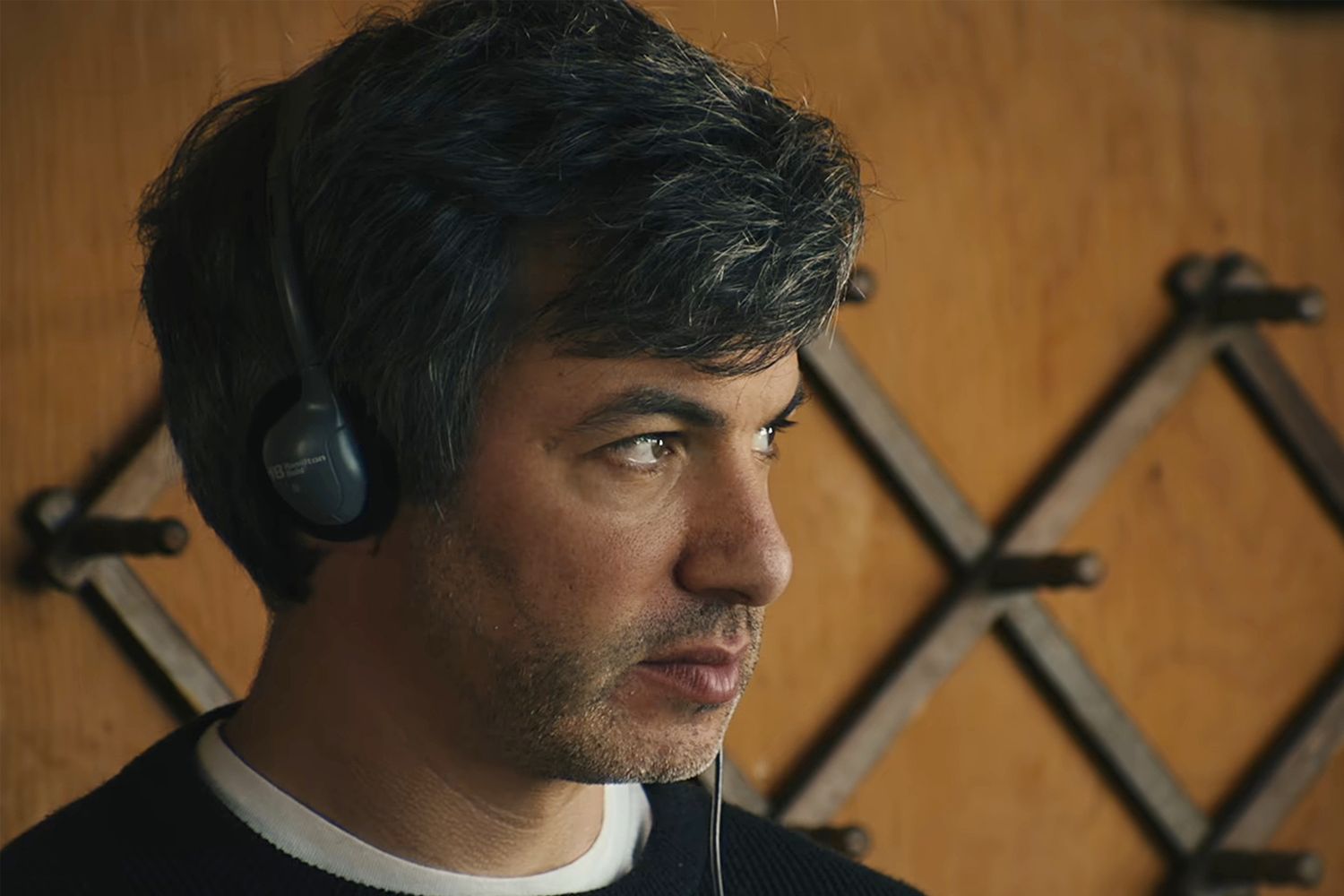 is because Elizabeth Holmes, tech CEO, comes off as innocent. She appears on camera as a genuine innocent which makes her either a brilliant actress or somebody taking a fall …but for who? And why? This film reminds me a great deal of Anatomy of a Fall, except I think it’s a lot deeper; You Can See Everything is a dissection for amateur psychologists everywhere. Anybody who sees the film is going to have an opinion on it. Some of those opinions will match, and many will not.
And so many questions arise in the wake: Do you think Nathan Fielder was appropriately distanced from his subject? Do you think Amanda’s amateur sleuthing helped or hindered the investigation? What’s the money angle? Elizabeth herself insists the money played no role, and yet, Billy clearly sees most everything as a potential cash grab; what do we make of that?
You Can See Everything felt long at 174 minutes, but I now see the wisdom of the extended runtime – the first half of the film needs to give us an impression of Elizabeth Holmes before Amanda Seyfried gives us her own slanted impression. My initial thoughts upon the conclusion of the film were that I’ve never respected Amanda Seyfried as much as I do right now. Amanda aside, this is quite a mystery and I invite all to see to deliver your own impressions. [BTW, privately, I will tell anybody what I think went on. I have no intention of spoiling first impressions here.]
There once was a dreamer named Liz
Who got into the health techno biz
Her product was flawed
A jury ruled “Fraud”
Was that wrong or did they see through her rizz?
Rated R, 174 Minutes
Director: Nathan Fielder, Lance Oppenheim
Writer: Well, at times, Amanda Seyfried
Genre: WTF?!
Type of being most likely to enjoy this film: Psychologists, amateur sleuths
Type of being least likely to enjoy this film: Billy Evans, I’m guessing


