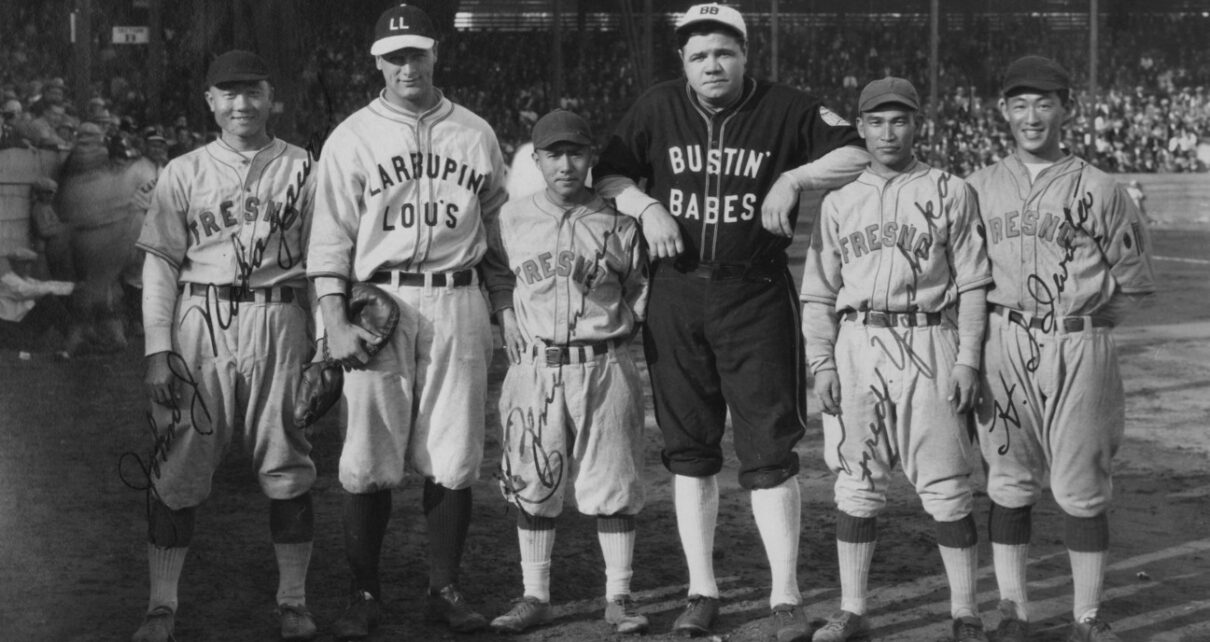
In retrospect, the story of baseball and Japan is among the saddest I’ve ever heard … and yet, there is a happy ending. I think.
Baseball was invented in the United States 150 years ago. A short time afterwards, it found its way to Japan. The Japanese embraced it like few things before. Each baseball game is a series of one-on-one duels. To the Japanese, these confrontations are akin samurai battles; the culture took to them instantly. As a result, the history of baseball is the history of the American-Japanese relationship. Japan adopted baseball as its national sport in 1896. Eighteen ninety-six! Why are we surprised that select Japanese players dominate the major leagues?
Diamond Diplomacy is a historical study of the Japanese-American relationship through the sport of baseball. I find it tragic that two cultures who so gladly embraced the sport in the early part of the 2oth Century became enemies. By the 1930s, some American baseball players were considered heroes in Japan. Babe Ruth showed up in 1934 to adoring fans everywhere. How did this cultural adoration deteriorate so quickly and completely? And where did it go once the war ended?
We look today at the Major Leagues today and see Shohei Ohtani as not only the best player in baseball, but perhaps the best baseball player of all time. This isn’t an accident. This isn’t a fluke. Japan loves baseball. It has produced hundreds of athletes capable of excelling in the major leagues. The problem is American baseball was generally racist in the first half of the 20th Century and specifically racist in the latter half. The documentary focuses on a number of key moments in Japan-US baseball relations; one of the key ones is the story of Masanori Murakami, a twenty-year-old in 1964 who played, briefly, on the San Francisco Giants. At the time, the MLB had agreed that no Japanese players were allowed in the league; only a clever regulation manipulation allowed such sacrilege.
One of the odd things about this complicated relationship was how the Japanese embraced the Negro Leagues. Black 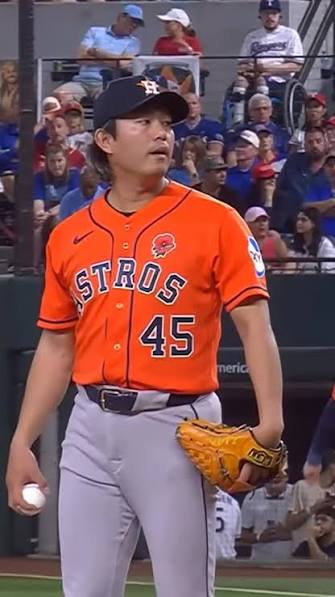 ball players, incapable of playing the MLB due to color line restrictions, found themselves treated as heroes in Japan, not unlike Babe Ruth. Heck, fellas, why would you ever leave?
It’s worth noting that while Black players were banned from the majors until Jackie Robinson showed up, Native Americans were not. However – and I swear this is true- every.single.man of Native American descent who played in the majors was nicknamed “Chief.” There just isn’t an end to the racism, is there? The Japanese word for “foreigner” is gaijin (外人), which is considered pejorative in many circles. How insulting is it for such a culture to show up ours on race relations? Welcome to the United States. Oh, we talk a big game when it comes to equality, but we can never lose our racist past and we certainly won’t if cannot acknowledge our racist present.
I’m not sure Diamond Diplomacy (full title: Diamond Diplomacy: U.S. Japan Relations Through a Shared Love of Baseball) covered much ground that wasn’t already public knowledge to any baseball fan. However, sometimes documentaries are useful for shining a flashlight on an issue. I certainly gave little thought to the exchange of baseball players across the Pacific Ocean. Hideo Nomo, Warren Cromartie, Ichiro, the steady exchange is something I knew about, but rarely questioned. I appreciate writer/director Yuriko Gamo Romer for saying, “take a look at this.” Is it monumental? No. But it helps describe where we are right now. That is for sure.
So Americans invented “base ball”
Never guessing who this sport might enthrall
They blocked all kinds of races
Accepting few traces
And, yet, the sport itself embraced one and all
Not Rated, 84 Minutes
Director: Yuriko Gamo Romer
Writer: Yuriko Gamo Romer, Ken Scheider
Genre: What *didn’t* WWII spoil?
Type of being most likely to enjoy this film: Historians
Type of being least likely to enjoy this film: Racists