Send Help is what happens when you have a fantastic idea for a #MeToo film, but everybody involved wusses out before the script is finalized. In short: I can’t MAKE you make a better film, but I sure do wish you had tried harder to see this vision through, because your feminist anthem devoured itself by Act III. And it was going so well … *sigh*
Linda Liddle (Rachel McAdams, who has now gone from Mean Girl to Old Maid right before our eyes) is not crazy cat lady. She’s a crazy bird lady. She’s brilliant, and the backbone of whatever fictional company this is supposed to be, but she’s also a mess – she has put little attention into her appearance, is socially awkward, and spends her time crunching numbers instead of wooing audiences or strategically deferring. So, she’s smart, has her own opinions, puts zero effort into her looks, and is over the age of 25. In other words, Linda is Donald Trump’s nightmare. Sure enough, Linda is not a hit with new CEO and dudebro, Bradley Preston (Dylan O’Brien).
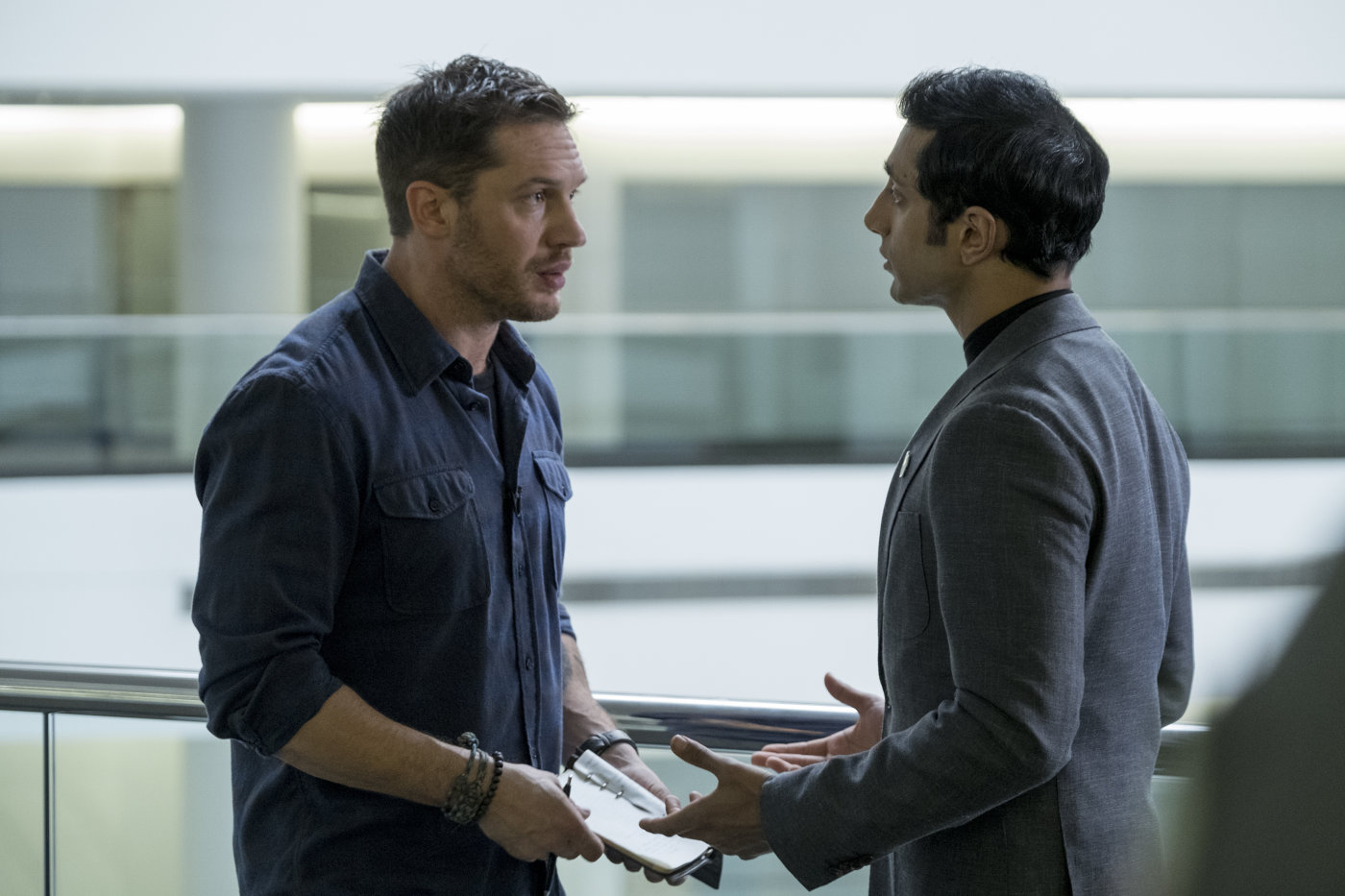
In turn, Linda watches herself shut out of the big meeting, has her hard work credited to another dudebro, and gets her promised promotion snagged up by yet another dudebro (I’m really not sure if these guys ae different people; they all look alike to me), she kind of loses it and asks for a one-on-one with the new boss. Bradley ain’t impressed with her upward desires, but asks her to join them for the Thailand meeting anyway. I think this scene makes more sense if -in the moment- Bradley realizes that up to that point only frat assholes have been invited to Bangkok, and they all might need somebody with a genuine business-oriented skill set for the negotiation.
It’s pretty clear that Send Help hates frat boys and the post-college toddlers they grow into. On the private jet, Linda sits alone while the four infantile males all get a big laugh out of Linda’s self-made “Survivor” audition tape. Instant karma is a bitch, and within five minutes, the plane has gone down in flames, killing every asshole on board except for Bradley, who is now unconscious on an island with Linda, a true survivor.
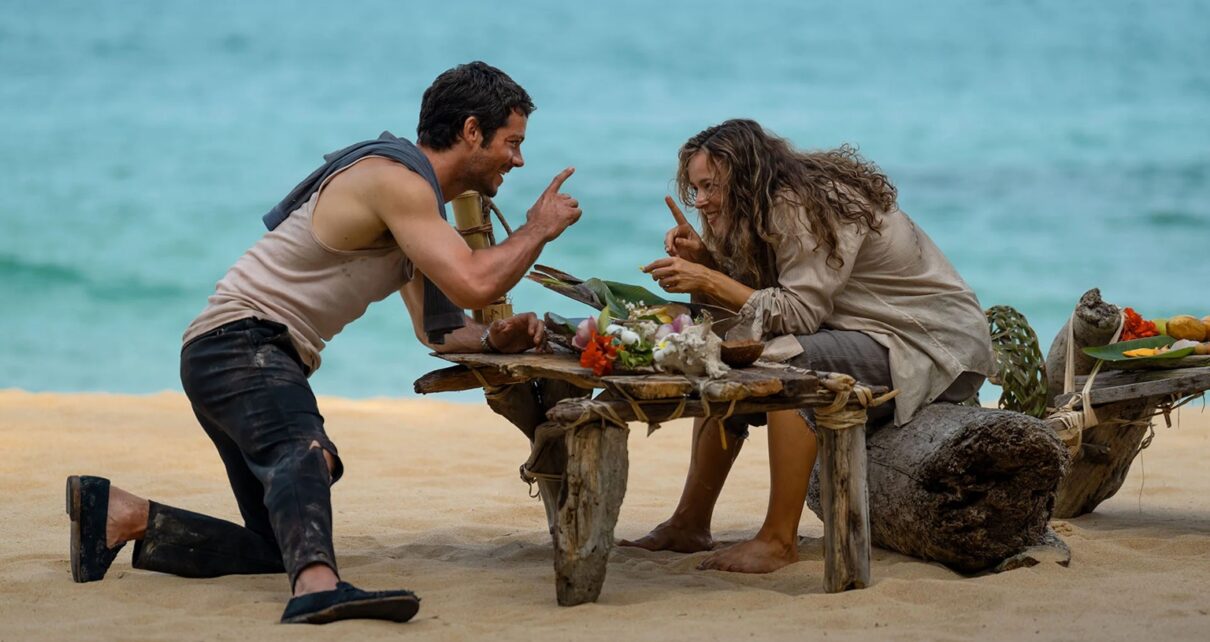
Now this is where I loved the film – Send Help immediately turns the tables on the power dynamic established. In a building, Bradley is a CEO and Linda is his underling. She has no power. On a remote island somewhere in the Gulf of Thailand, with Bradley nursing a near-broken leg, Linda now has all the power, especially when she discovers early on how to find food, water, and shelter. Well, sure, there are some eye-rolling gaffes, like a wild boar that is clearly CGI – did it have to bleed that much? Why?—and a perilous cliffside that is also, clearly CGI, but, shrug, we take it. What comes across here most is that Linda is in charge because she knows how to survive and pissed-off Dylan does not. But Dylan comes from such a patriarchal realm that he can’t adjust to it.
And about now, I’m thinking this is an early candidate for best film of 2026.
*sigh*
Wouldn’t it be nice if January films were not disappointing? That would be nice.
I cannot tell you how it turns, only that it does. For whatever Sam Raimi and crew intended to do, they were making a great statement picture and turned it into a mediocre thriller. By the end of Send Help, I no longer thought of the film as feminist but more as a lesson to young filmmakers that sometimes more is less. Yes, I suppose the picture turned out more exciting than it had been, but now it’s just a thriller and nothing more. Great film makes statements. Send Help made none. I’m still giving a recommendation just because the parts before Act III were so positive. Yet, I cannot help feeling let down by a plot gone wrong.
There was once a manger named Linda
Holding to sanity by the teeth of her skin-da
The frat boys would taunt
Not knowing she’d haunt
When life decided to do them right in-da
Rated R, 113 Minutes
Director: Sam Raimi
Writer: Damian Shannon, Mark Swift
Genre: Films without conviction
Type of being most likely to enjoy this film: #MeToo, first half of film
Type of being least likely to enjoy this film: #MeToo, second half of film