Want to know what White Privilege is? White Privilege is being able to take a shotgun into an office building and making it to the CEO’s office. Don’t tell me that happens in broad daylight if you aren’t white. It is a classic “being given the benefit of the doubt” even if you’ve come for vengeance.
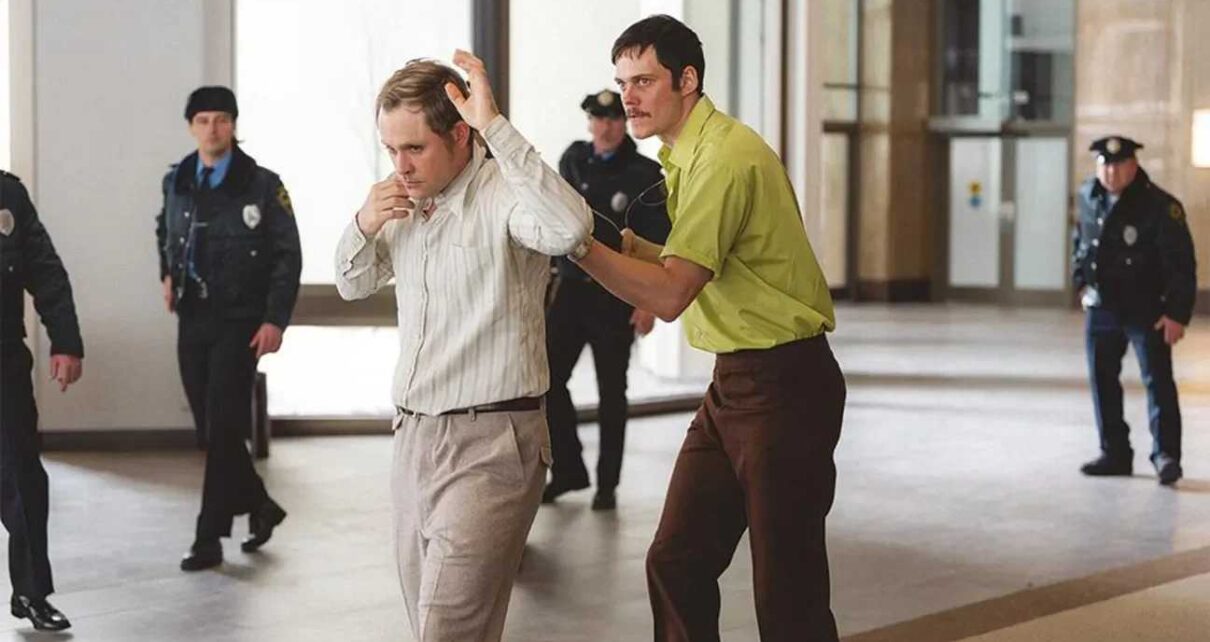
On February 8, 1977 in downtown Indianapolis, Tony Kiritsis (Bill Skarsgård) went into the Meridian Mortgage Company with a shotgun hidden in a box intended for long-stem roses. His plan was to take CEO M.L. Hall hostage until he got what he wanted. M.L. was on vacation in Florida, so Tony settled for M.L.’s son, Richard Hall (Dacre Montgomery). Richard, of course, is also a testimony to White Privilege, having inherited a managerial job solely on the basis of nepotism. As Tony hooked Richard up to a Dead Man’s Wire (a lethal device that will activate even if the operator is absent), I couldn’t help thinking how truly awful it would be to hook up Don Jr. or Eric to one of these things and hold them hostage for days. Yes, as much as the children of Trump deserve to be held accountable for their crimes, hypocrisy, and assholery, it would be a terrible shame if someone were to do it at gunpoint. Real, real shame. Yup. Such a shame.
Because of the elaborate set-up, Tony managed not just to corral Richard, but to transport his victim to his apartment. I’m sure that’s what makes this real-life tale so compelling, that Tony Kiritsis was able to commit a crime with full public awareness that continued for several days.
This is, essentially, the movie. Tony’s complaint is that he bought some land with the idea of developing it and selling it at a profit, but when it came time to do the selling, Tony contends the lien-holder pushed potential clients away from the property, waited for Tony to default on the loan, and then collected the property and the clients. I find Tony’s story believable even if his actions border on insane. In the very least, Meridian Mortgage doesn’t seem to have clean hands here. Arguing these points isn’t something the movie wants to do. Instead, it gives us WCYD deejay Fred Temple (Colman Domingo) as an unwitting ally and complaint megaphone.
When it comes to kidnappings, there’s a fine line between doing your job and getting too involved. We can see Temple getting a little flustered at the effusive praise from the kidnapper/fanboy. Towards the end of the film, the look on Temple’s face reads: “please, man, stop referring to me.”
Dead Man’s Wire is based on a true story, and like most films based on a true story, there’s simply not enough there. We get the point early on that Tony 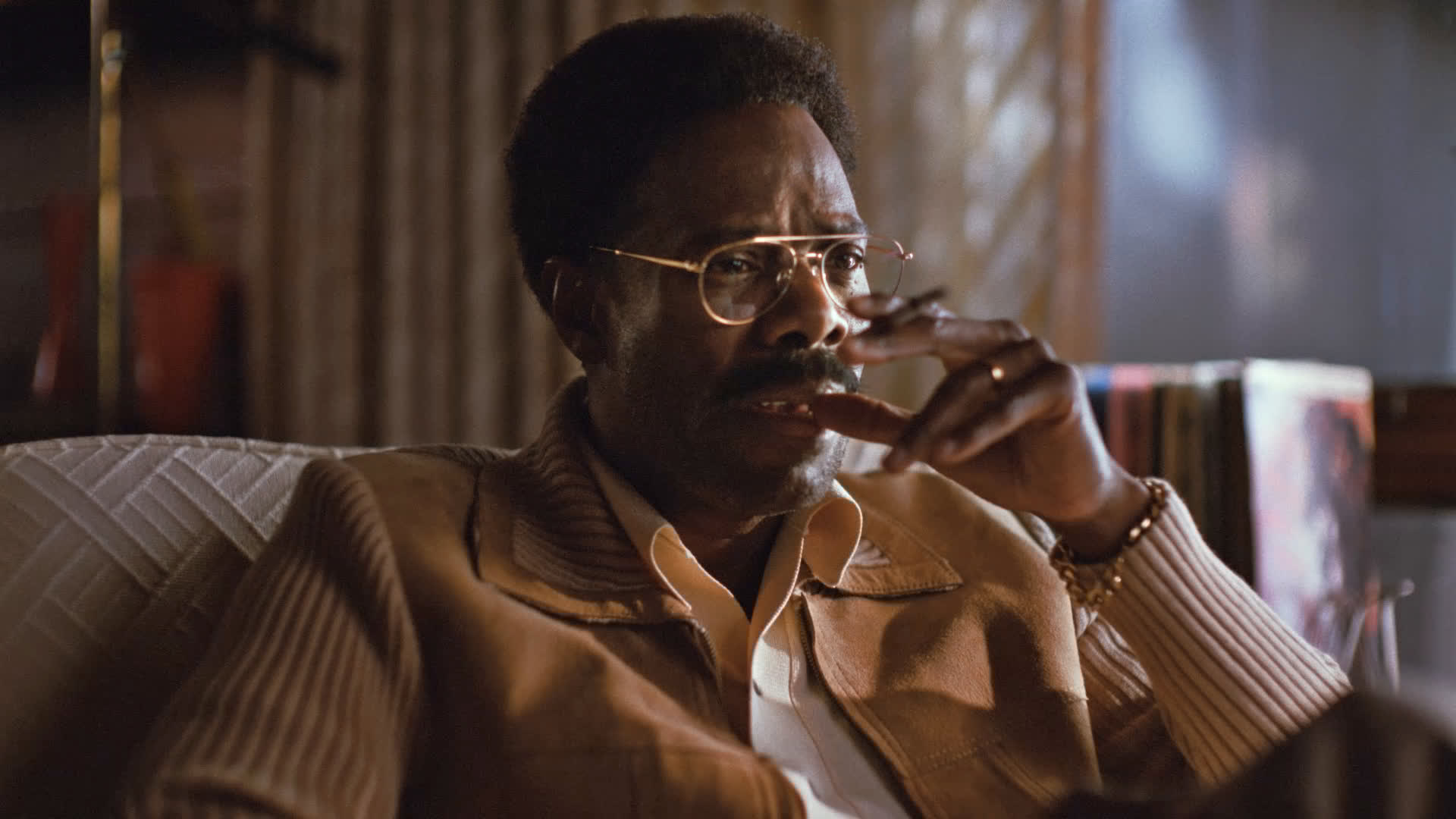 Kiritsis is pissed. We know why he’s pissed, and we might even sympathize with him if he weren’t so deluded in self-righteousness. At this point, I question why this film was made. Dead Man’s Wire is the kind of film that highlights injustice, especially overlooked injustice. Did Meridian Mortgage Company deliberately push a situation to cheat Tony? I’m sure they’d never frame it that way, but I could easily see a mortgage company steering business its way at the expense of mortgage holder. And while big boss M.L. Hall (Al Pacino) comes off as a Grade A asshole in this film, the story isn’t about him and whatever he has done. The story is about the guy who brought a shotgun to a business to get his way; we don’t root for those people even if they’ve been wronged.
There once was a nothing named Tony
Who had a deal that ended up phony
Angry as a wet hen
He went for revenge and then
The antics found an audience quite stony
Rated R, 105 Minutes
Director: Gus Van Sant
Writer: Austin Kolodney
Genre: F***ed up real life
Type of being most likely to enjoy this film: Real life junkies
Type of being least likely to enjoy this film: Anybody involved in the mortgage business