I am overwhelmed, overappreciative, and overenthusiastic about the commonplace nature of LGBTQ+ representation in theaters at this moment in time. Today, I saw three (3) full films with LGBTQ+ leads: a teen romance, a horror, and a slapstick comedy. While this would have been unheard of during my teen days, today it comes with a blasé air of “so what?” I have to point out these things all found mainstream theaters, which is kinda cool. Now, given all the overwhelmed, overappreciative, and overenthusiastic, will I still be overcritical? Of course I will. This is the Steel Frog Blog.
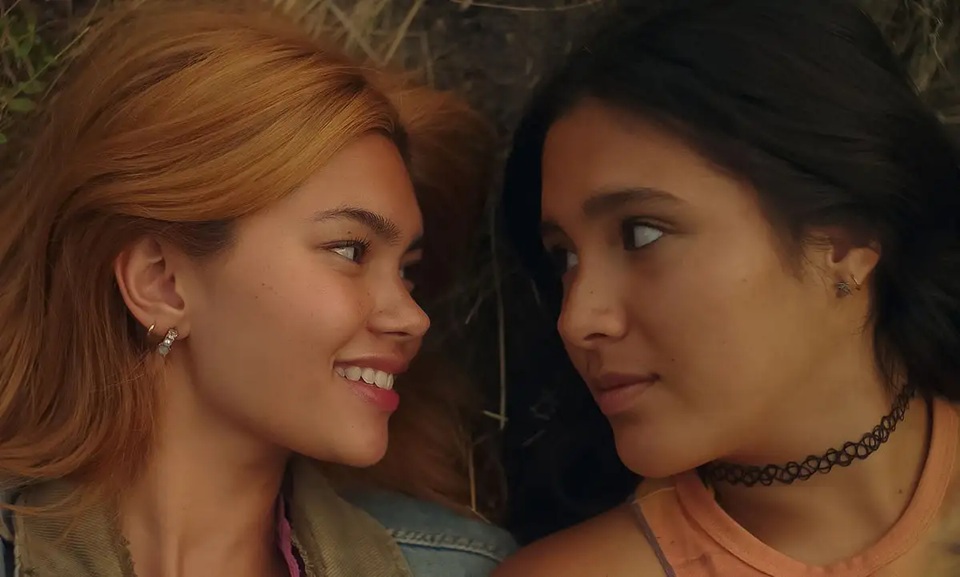
Set in the semi-rural Oregon in the days of AOL chat, which are now frighteningly long ago now, there’s a new girl in town, Coley (Maya de Costa). Coley has an intense backstory that ain’t quite made for the locals – her mother just died (suicide?) and she finds herself living in a whole new world of pain with -but not necessarily because of- her estranged father (Zach Braff). But that’s for later. For now, she’s in a diner catching the eye of blue-plate special Sonya (Myra Molloy).
There is an instant spark. We know these two are going to get together; it’s not even a matter of time – they’re practically there the moment they make eye contact. It’s just a matter of how? That answer comes when Sonya’s boyfriend unceremoniously dumps Coley into the local estuary against her wishes. The latter storms away angry, but she’s chased down by Sonya … and there it is. But uh oh, the big doof got her wet. Make sure you don’t feed her after midnight.
Theirs is a teen romance at a time when pregnancy is the biggest concern around such. Obviously, that doesn’t factor into a teen lesbian relationship, hence, the film revolves around the girls’ maturity. Can Coley handle getting close to someone new? Can Sonya break her traditional bonds? Their romance flourishes away from people and distractions. Well, flourishes in a very PG sense, which seems a cheat given the “R” rating. What were you planning on including, film? While I agree this is mature subject matter, you sure left out most of the juicy stuff. Even their romantic language: “olive juice” seems immature: the girls want to say the magic words without actually saying them.
The plot here has both girls questioning what their relationship is and how much it means to them without ever getting to: “Screw this! Society can suck it!” This also feels like a cheat. Hence, I am left with the best relationship in the film not being the one advertised. The best part of Girls Like Girls is watching Coley slowly come to terms with her father. They both lost the most important person in their lives and have to deal with who survived. This is the relationship worth watching; it’s a darn shame that the window dressing relationship seems too immature to get there.
Girls Like Girls isn’t going to set the world on fire. I like that LGBTQ+ is so commonplace that this film feels “meh.” If it had been made in the 1950s, heads would roll. But this isn’t the 1950s, and commonplace or not, Girls Like Girls feels a little empty, like the material was intended for a six-episode TV show, where we could explore the depth of the affection and societal mores presented by a 1990s teen lesbian love affair rather than having the leads retreat altogether. I love that writer/director Hayley Kiyoko finds teen romance awkward. Well, it is awkward. Kudos; you’ve captured the feeling well. OTOH, awkward teen romance has a shelf life, and for me, that ended about 15 minutes before end credits.
There once was a girl named Coley
Who encountered a flame most unholy
Hey mom, what’s your prob?
Are you new to this job?
With lesbians, there’s never “slipping one by the goalie”
Rated R, 95 Minutes
Director: Hayley Kiyoko
Writer: Hayley Kiyoko, Stefanie Scott, Chloe Okuno
Genre: If you like me, please check this box
Type of being most likely to enjoy this film: LGBTQ+
Type of being least likely to enjoy this film: Bigots